

As summer draws to a close and pool use decreases, the debate arises about the best way to protect it during the off-season. There are three main options: draining it, which risks damaging the pool structure; keeping it open, which involves constant expense and maintenance; or using a pool cover , an efficient solution that protects the water, reduces dirt, and optimizes upkeep. This comprehensive article will guide you in choosing the best pool cover, explaining the differences between models, materials, and prices, as well as the essential factors for an informed purchase. We'll also show you the best options on the market so you can find the cover that best suits your pool and needs.
Why use a pool cover? Benefits and advantages

Choosing the right pool cover offers numerous benefits, both in terms of safety and water conservation . Its function goes far beyond preventing leaves and debris from falling in; it's also key to protecting the pool structure, saving energy, and extending the lifespan of its components. These are the main advantages:
- Protection against dirt and contaminants: Pool covers act as a barrier against leaves, pollen, dust, insects, and all types of external agents.
- Less use of chemicals: By preventing the entry of external agents, the water maintains its balance better and requires less chlorine and maintenance products.
- Saving water and preventing evaporation: A good cover significantly limits natural evaporation, which is especially important in hot or water-restricted areas.
- Child and pet safety: Many models offer safety systems that prevent accidents by avoiding accidental access to water.
- Thermal insulator: Solar covers or thermal blankets help maintain water temperature, ideal for extending the bathing season and saving energy on air conditioning.
- Preventing algae growth: By limiting solar incidence, especially opaque models, they hinder the proliferation of algae and microorganisms.
- Infrastructure maintenance: A pool cover extends the life of the pool and accessories, reducing the impact of frost, acid rain, and permanent dirt.
Using a cover during the fall and winter is not only practical, but also becomes a long-term investment due to the savings in water, energy, and cleaning products.
Types of pool covers: which one is right for you?
Choosing the right type of pool cover depends on both your intended use and the characteristics of your pool. Currently, the market offers a wide variety of options, each with its own distinct advantages:
- Winter covers: Made of durable, opaque materials like PVC, they are designed to withstand low temperatures, frost, and rain. They prevent dirt from entering and reduce algae growth. Ideal for completely enclosing the pool during the colder months.
- Summer or solar covers: Also known as thermal blankets, they are usually made of bubble-wrapped polyethylene. Their function is to reduce evaporation and increase water temperature by harnessing solar energy.
- Automatic and roll-up covers: These are more sophisticated and include manual or motorized systems for easy opening and closing of the cover. They provide comfort and maximum safety, ideal for frequently used or family pools.
- Telescopic or structural covers: Fixed or mobile structures made of polycarbonate, methacrylate, or glass allow you to heat your pool and use it year-round. Although they require a larger investment, they offer the best results in terms of protection, comfort, and durability.
- Safety nets: Designed primarily to prevent accidental drops, they are lightweight and easy to install, but they do not protect against dirt or maintain temperature.
Each type responds to specific needs, so you should consider how you will use the pool, whether you are looking for safety, energy savings, ease of use, or to extend the life of the water and facilities.
Top 1. The best pool cover
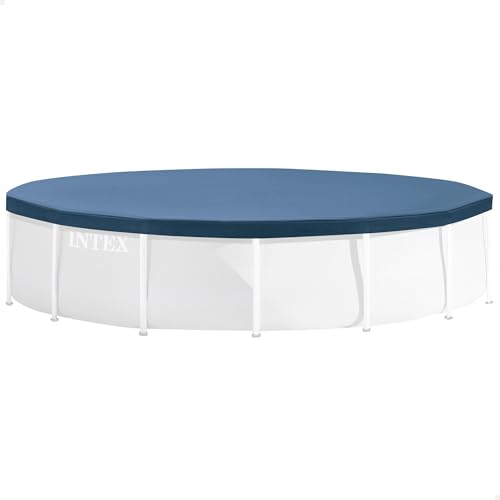
Professionals
- Ideal for removable pools with a diameter of 305 cm.
- Drainage holes to avoid water accumulation.
- Weather resistant.
Cons
- Designed primarily for Intex pools.
- If too much water accumulates, it can sink.
- Durability is limited compared to other models.
Selection of featured pool covers
The market offers a wide range of covers and tarps adapted to different needs. Here we offer a selection of quality options for different sizes and budgets:
-
Bestway 58036 – Removable Winter Pool Cover
Made of durable plastic, compatible with above-ground pools up to 305 cm in diameter. It includes drainage holes to prevent water accumulation and reduce evaporation.
-
Intex 28038 – Prisma rectangular pool cover
Made of vinyl, suitable for Intex Prisma and Small Frame models. Dimensions: 300 x 200 cm, with a 20 cm overhang and a tether cord.
-
Bestway 58232 Winter Cover for Removable Pool
Made of PVC, measuring 404 x 201 x 100 cm, suitable for rectangular and oval pools. It must be tightly taut to prevent water from sinking it.
-
Provence Outillage Cover 9 x 5 m for Rectangular Pool
Blue cover (although shown black in photos) for rectangular pools, with a central mesh and securing loops, measuring 9 x 5 meters. Helps with rainwater drainage and provides protection.
-
SORARA Protective Cover for the Pool or SPA
Made of water-repellent plastic, suitable for covering above-ground pools and outdoor furniture. Measures 2.55 x 1.55 x 0.7 meters.


Pool Cover Buying Guide: Key Factors

When buying a pool cover, there are several criteria to consider to choose the best option. It's not just the size that matters, but also the material, the type of closure, ease of use , and the level of protection you need. Let's look at each one in detail:
Size and shape
The fit is crucial. A pool cover must perfectly match the shape (round, rectangular, oval) and exact dimensions of your pool to cover it completely. Remember to measure the length, width, and, if applicable, the diameter, allowing a small margin for the necessary overhang when securing it. Furthermore, if the pool is irregularly shaped or large, custom-made solutions are available.
Consider whether you prefer rigid, semi-rigid, or flexible covers . Rigid or structured covers help prevent sagging under the weight of rain or snow, ensuring that rainwater doesn't penetrate the pool.
Material and durability
The material determines the strength and lifespan of the cover:
- Polyethylene: Lightweight and economical, widely used in solar blankets and summer covers.
- Vinyl: Sun and wear resistant, ideal for protective covers and winter blankets.
- PVC: It provides maximum durability, waterproofing and resistance, and is widely used in opaque and professional roofs.
- Polycarbonate or methacrylate: In telescopic or fixed covers, great thermal insulation and aesthetic beauty.
- Technical fabrics: Low-density polyester with anti-fungal coating and UV protection, ensuring longevity and easy cleaning.
Always look for materials with UV protection and resistance to mold and chemicals. This ensures that the cover will withstand the test of time and continuous use.
Security levels and ease of use
Safety is essential if there are children or pets at home. There are covers certified according to European standards (such as NF P 90-308), which guarantee weight resistance and impenetrable locking systems. Furthermore, it is advisable to choose models that are easy to install and remove, with rolling systems, ropes, or cranks for convenient handling.
Ease of use is a factor to consider if you open and close your pool several times a day. Automatic, roll-up, or telescopic covers offer maximum convenience, while inexpensive tarps and covers may require more effort to operate.
Aesthetics and visual harmony
Aesthetics can play a significant role, especially if the pool is a central feature of your garden or terrace. Pool covers are available in a variety of colors, textures, and finishes; from classic blues and greens that blend seamlessly with nature, to polycarbonate or glass finishes that offer transparency and elegance.
Budget
The price of a pool cover varies depending on the material, size, type of system, and level of technological sophistication. You can find simple tarpaulins from €7 to €13/m², semi-automatic covers or roll-up systems from €20 to €40/m², and telescopic, motorized, or premium design solutions that reach much higher prices. Make sure to choose one that fits your budget without compromising safety or durability.
Before deciding, consider whether you need a professional roof, a temporary winter solution, an affordable solar blanket, or a fully automated and aesthetic option. Always ask about warranties, after-sales service, and professional advice, especially for structural or large roofs.
Where to buy pool covers?

Once you know the type of pool cover you need, the next step is finding the right place to buy one. There are several specialized platforms and chains where you can compare prices, read reviews, and choose from a wide catalog:
- Amazon: It offers the widest variety of pool covers, from both well-known brands and generic manufacturers. Ideal for comparing user reviews, but keep in mind that many products come from third-party sellers, so it's a good idea to check delivery times and warranties.
- Bauhaus: We offer a wide range of tarps and covers, highlighting thermal solutions that can turn your pool into a swimming pool suitable for swimming even in cooler seasons.
- Crossroads: Another option where you can find a variety of models thanks to its marketplace system. It's important to check the seller's name, shipping costs, and compare possible lower prices by purchasing directly from the manufacturer.
- Decathlon: Their offering focuses on tarps, thermal blankets, and covers for removable pools, although many products are sold by third-party vendors. Prices are competitive, and the variety is sufficient to cover basic needs.
- Leroy Merlin: It's one of the stores with the largest catalog of pool covers, offering round, rectangular, oval, and rigid PVC pool covers. The price range is wide, including professional options for those seeking maximum protection and durability.
In addition to these large distributors, there are specialized stores for pool covers, thermal blankets and automatic covers, where you can request personalized advice , tailor-made solutions or specialized installations for pools with unusual shapes.
Advanced tips and practical recommendations
Choosing the perfect pool cover requires taking into account some additional details that make a difference in the long-term user experience. Here are some expert recommendations and helpful tips:
- Periodic revision: Inspect the tarp or cover frequently for tears, worn grommets, breaks in the fastening system, or water accumulation.
- Maintenance and cleaning: Clean the cover before storing it. Use mild soap and water, and let it dry completely to prevent mold or unpleasant odors.
- Storage: When removing the pool cover, roll it up rather than fold it. This way, it retains its shape better and prevents marks or creases. Use rollers or specific bags if available for your model.
- Ease of installation: If you plan to install and remove the cover frequently, opt for lightweight, easy-to-handle models. For larger pools, consider investing in a reel, automatic system, or hiring a professional installer.
- Personalization: If your pool has an atypical shape, there are custom-made covers that guarantee a perfect fit, maximum insulation, and aesthetics.
- Attention to the weather: In areas exposed to strong winds, choose models with reinforced anchoring systems or additional weight to prevent detachment and damage during storms.
- Certifications and regulations: If you're looking for maximum security, make sure the product meets specific European standards that certify the cover's strength and reliability.

Common mistakes when choosing pool covers and how to avoid them
Before making a decision, it's a good idea to review some common mistakes and how to avoid them to ensure your investment is a success:
- Not measuring the pool correctly: A cover that is too small leaves unprotected areas, while one that is too large is awkward and difficult to install.
- Choose by price only: Sometimes, cheap is expensive. A low-quality cover may only last one season and not withstand the elements.
- Dismiss security: If you have children or pets, prioritize covers with secure closures and sturdy materials that prevent accidental access.
- Ignore local weather: In areas with high winds, rain, or snow, it is essential to use reinforced roofs and additional fastening systems.
- Not considering ease of use: If you plan to cover and uncover the pool daily, consider automatic systems or rollers to avoid unnecessary effort.
As you've seen, a pool cover is much more than just a tarp over the water . Choosing the right model is essential to saving time and money and keeping your pool ready for use at any time. Carefully assess the specific needs of your pool, the climate, and your lifestyle. This way, you'll enjoy the benefits of a clean, safe, and protected pool all year round, with minimal effort and maximum efficiency.

Table of Contents
- 1 Why use a pool cover? Benefits and advantages
- 2 Types of pool covers: which one is right for you?
- 3 Top 1. The best pool cover
- 4 Selection of featured pool covers
- 5 Pool Cover Buying Guide: Key Factors
- 6 Where to buy pool covers?
- 7 Advanced tips and practical recommendations
- 8 Common mistakes when choosing pool covers and how to avoid them